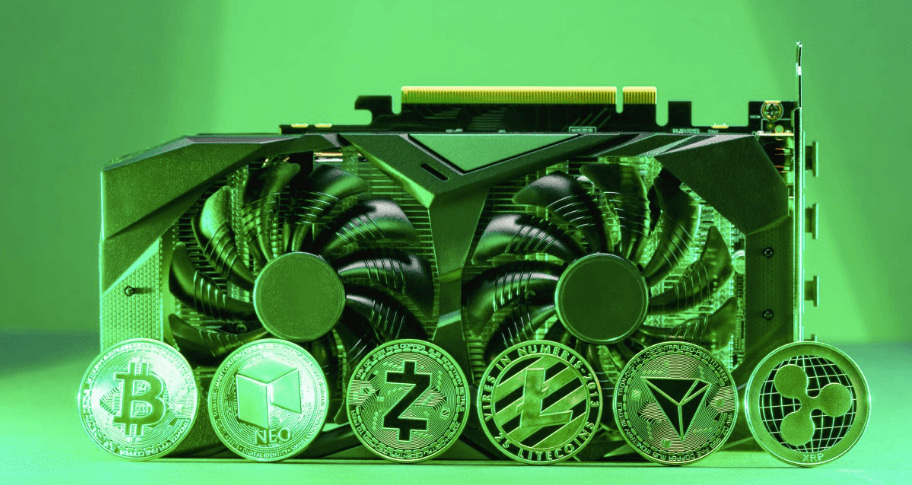
The Future of Crypto Mining

The future of crypto mining hinges on efficiency, resilience, and scalable innovation. AI-guided decision frameworks, diversified geographic deployment, and modular, low-latency hardware will lower costs while hardening security. Advances in immersion cooling, flexible energy sourcing, and grid-responsive demand will reshape the cost curve and reliability. Regulation and thoughtfully designed incentives align capital with grid stability, enabling scalable, compliant mining that supports decentralized networks. The question remains: how quickly will these elements converge under real-world constraints?
What’s Driving the Next Era of Crypto Mining
The next era of crypto mining is being shaped by a convergence of efficiency, decentralization, and regulatory clarity, which together redefine economic viability and network security.
Market dynamics steer profitability, while energy pricing pressures push operational discipline.
AI optimization enhances decision-making, and supply chain transparency reduces risk.
This trajectory cultivates resilient networks and freedom-driven, globally distributed mining ecosystems.
Cutting-Edge Tech: Energy, Cooling, and Hardware Bets
Advances in energy sourcing, cooling methodologies, and hardware architectures are redefining the cost curve and reliability of mining operations.
The approach emphasizes energy efficiency and scalable infrastructure, aligning economics with performance.
Immersion cooling emerges as a pivotal technique, reducing parasitic losses and enabling denser deployments.
Strategic bets include modularization, low-latency hardware optimization, and resilient power provisioning for sustained future-proofed outputs.
Regulation, Incentives, and Grid Integration
The discourse emphasizes regulatory clarity to reduce risk, while incentive design aligns capital deployment with grid stability and low-carbon objectives.
Strategic frameworks integrate demand response, site selection, and grid interoperability, enabling scalable, compliant, and resilient mining operations amid evolving policy and market signals.
Impacts on Decentralization, Security, and the Ecosystem
How might the decentralization footprint of crypto mining evolve as incentives, hardware efficiency, and geographically dispersed deployments converge, and what are the downstream implications for network security and ecosystem resilience?
The analysis highlights decentralization risks, with diversified participation limiting single points of failure, while security resilience improves through heterogeneous nodes, cross-border collaboration, and resilient governance, sustaining an open, freedom-oriented mining ecosystem.
Frequently Asked Questions
How Will Mining Profitability Evolve in Volatile Markets?
Mining profitability fluctuates with volatile markets, yet efficiency gains and adaptive governance shape resilience; strategic operators weigh environmental trade offs, invest in scalable infrastructure, and preserve future blockchain security, while small scale competition influences equilibrium in an evolving market.
What Are the Long-Term Environmental Trade-Offs of Mining?
She nods to the long term environmental trade-offs, noting that the sector must align with energy transition goals. In strategic terms, it weighs resource intensity, scalability, and resilience, guiding forward-looking, freedom-minded operators toward sustainable, verifiable efficiencies.
Can Small-Scale Miners Compete With Industrial Operations?
Small scale can compete with industrial ops through niche advantages, but scale economics and energy mix matter. Strategic, forward-looking analysis shows block reward dynamics and optimized energy mix influence resilience, costs, and freedom in distributed mining ecosystems.
See also: Best Programming Languages to Learn in 2026
How Will Governance Shape Mining Network Upgrades and Forks?
Governance mechanisms steer fork decision processes, guiding upgrades like compasses through fog. The strategic framework coordinates diverse actors, forecasting resilience and freedom, while incremental changes align stakeholders toward sustainable mining network evolution and responsible governance.
What Role Will Miners Play in Future Blockchain Security Models?
Miners will anchor security through robust mining incentives and protocol-aligned governance dynamics, shaping resilient consensus amid evolving threats. They act as stewards of open networks, balancing economic incentives with permissionless innovation, ensuring sustainable security without centralized control or coercive governance.
Conclusion
The next era of crypto mining hinges on strategic integration of AI-guided optimization, diversified geographies, and modular hardware to drive efficiency and resilience. Immersion cooling, demand-response grids, and transparent regulation will shift the cost curve while enhancing security. The ecosystem evolves like a precision instrument—calibrated, adaptive, and capable of rapid response to shocks. If deployed responsibly, these advances can sustain decentralized networks, align capital with grid stability, and unlock scalable, compliant mining that strengthens global crypto infrastructure.